
BONK × Future Artifact · four-colour riso · September 2026
Small object. Big signal.
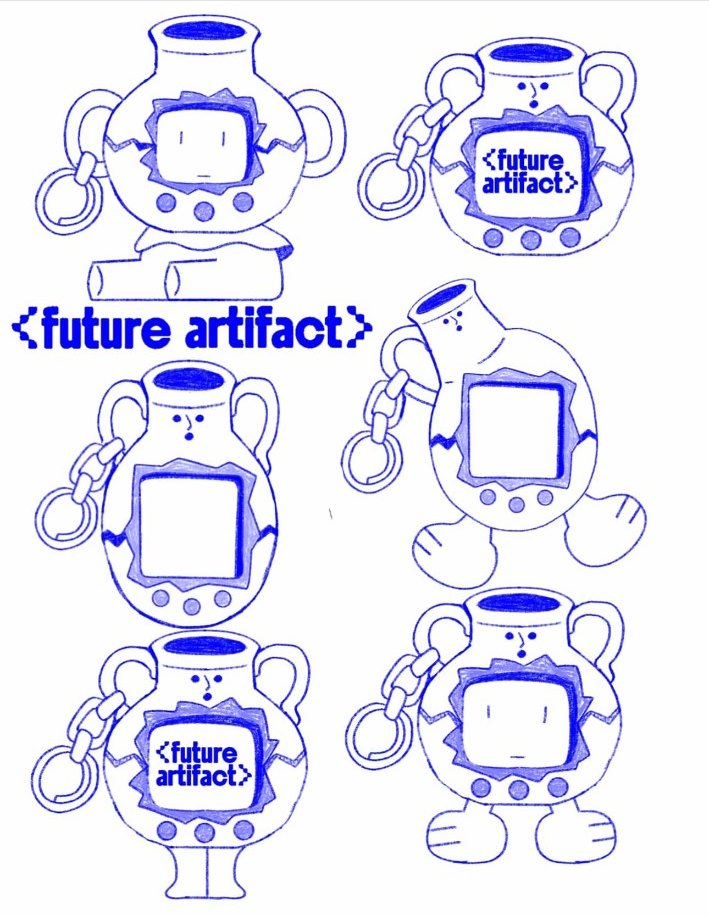
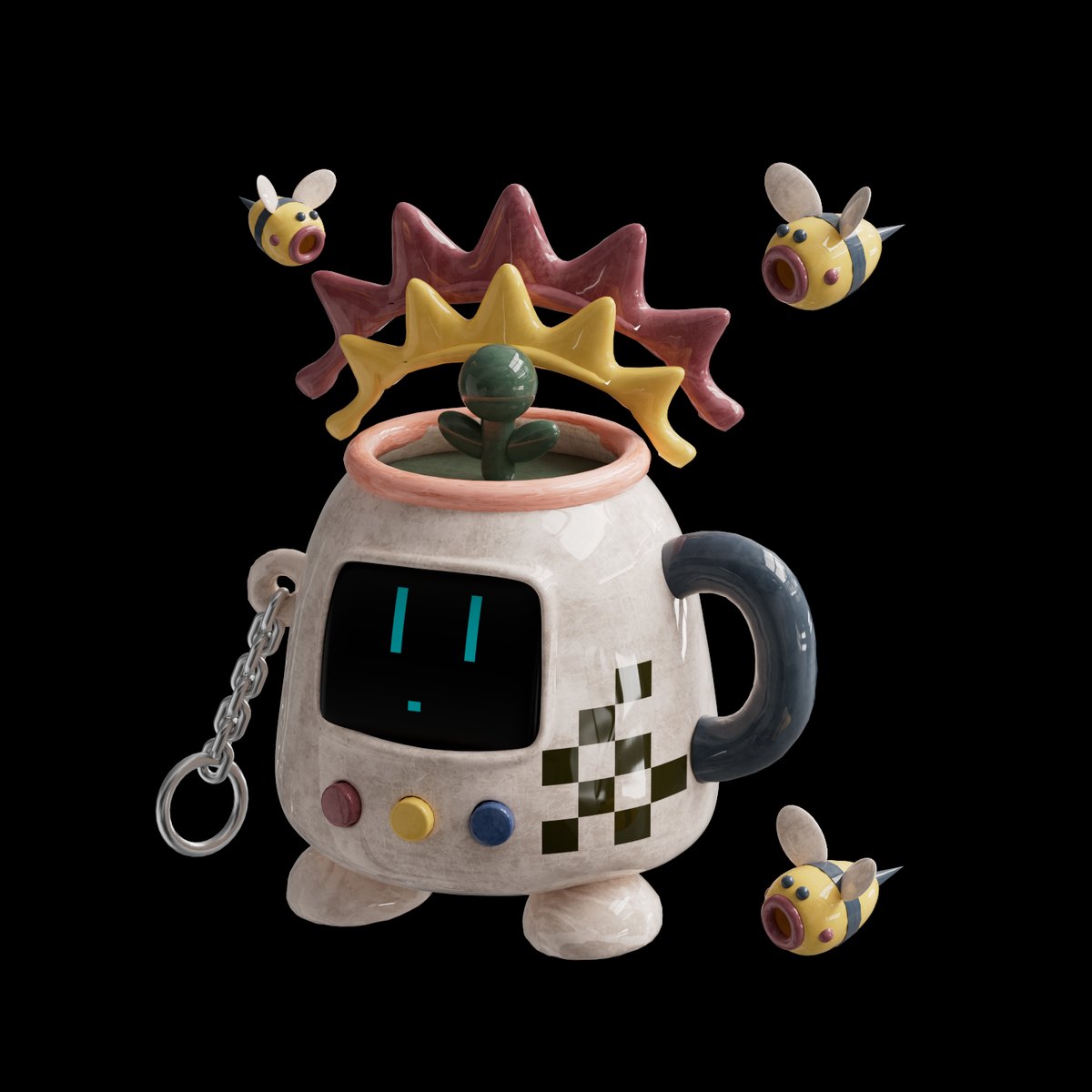
A collaboration print for Future Artifact's pop-up at the BONK shop in Kansas City. Working from sketches art directed by Harrison Cook, the robot-pot became a 3D ceramic character with a flower and three pot-bees, then a mixed-media collage, then four layers of riso ink.

01 · Where it started
His pot. My signal.
Future Artifact is Harrison Cook's pottery and art practice in Omaha's Benson district. His art direction established the sketch reference: robot vessels with handles, a ring, and a screen where the face should be. That was the starting point.
The brief I wrote on August 5 split the work by what each brand is good at. One line held it together:
Future Artifact builds the object. BONK activates the signal.
- 3Exactly three pot-bees: tiny ceramic vessels that learned to fly, not bees with pottery texture.
- ≤30%The plant stays small, no more than 20–30% of the body's height. Never a crown.
- ≤30%Checker covers no more than a third of the character. The surface carries the complexity, not the silhouette.
- 60–70%The character fills most of the page. Collage, ink and misregistration do the rest.
The order was fixed too: 2D drawing, then a 3D ceramic translation, then a posterized mixed-media riso.
02 · The object
A pot you could almost fire.
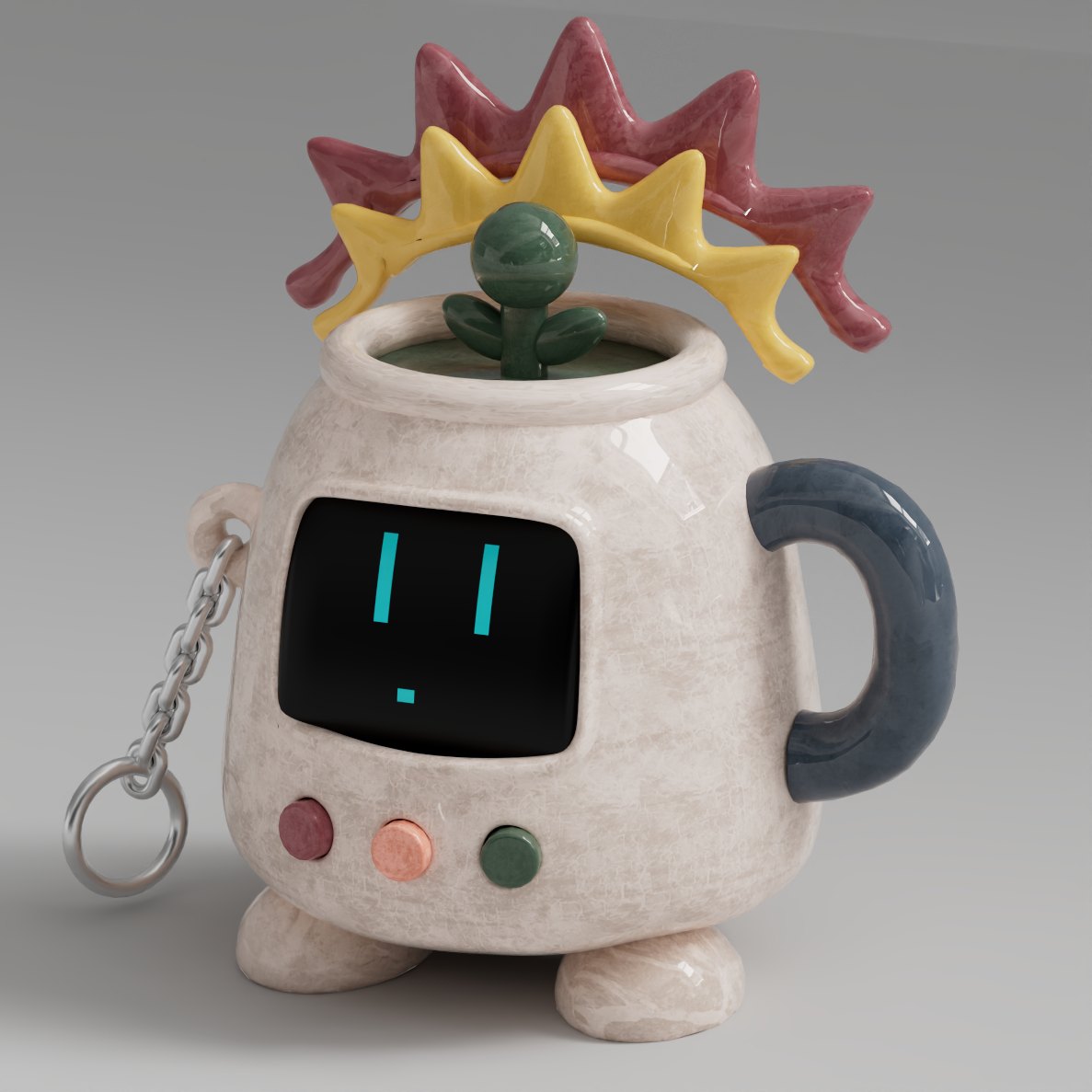
I built the pot in Cinema 4D and rendered it in Redshift. The body started from an AI-generated base mesh, which I remeshed and rebuilt by hand. The rim, handle, feet, buttons and screen are modelled parts, and each bee is a stack of small vessels with a stinger.
The surfaces are ceramics from the Redshift library: speckled white stoneware, a slate glaze on the handle, coloured clay buttons. The chain and ring are brushed metal.


03 · A wrong turn
The crown came off.
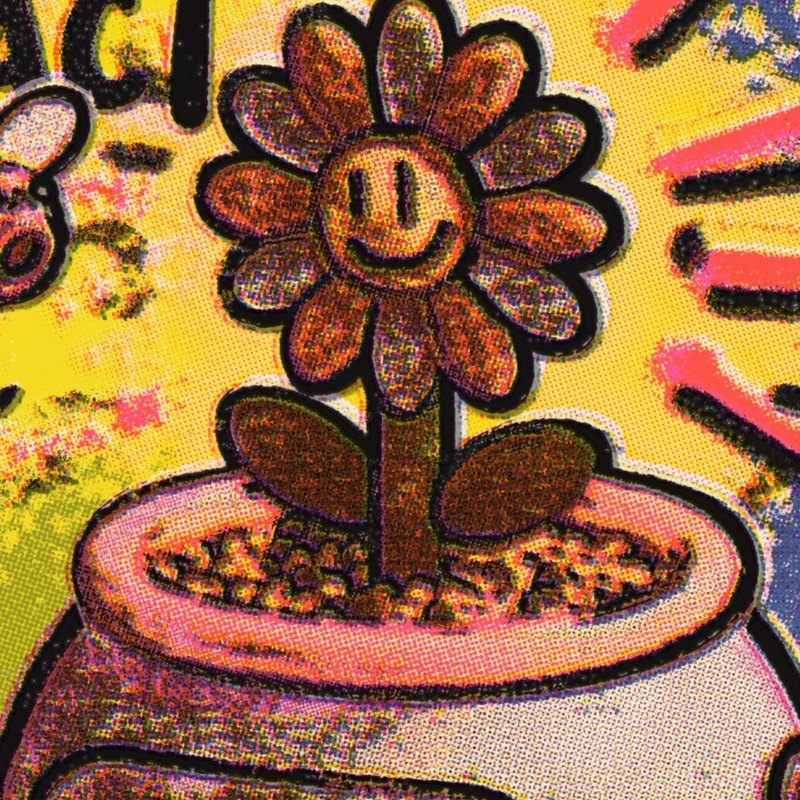
The first renders gave the pot a spiked red and yellow crown over a small sprout. It looked good, and it broke the brief: the plant was meant to be small, and the crown made it the loudest thing on the pot. By August 17 the crown was gone and a single daisy had taken its place. The pot was the character again.
04 · Into print
Render in. Poster out.
The brief asked for the 3D to feel processed into a printed world, not dropped onto a background. In Photoshop it went through five steps:
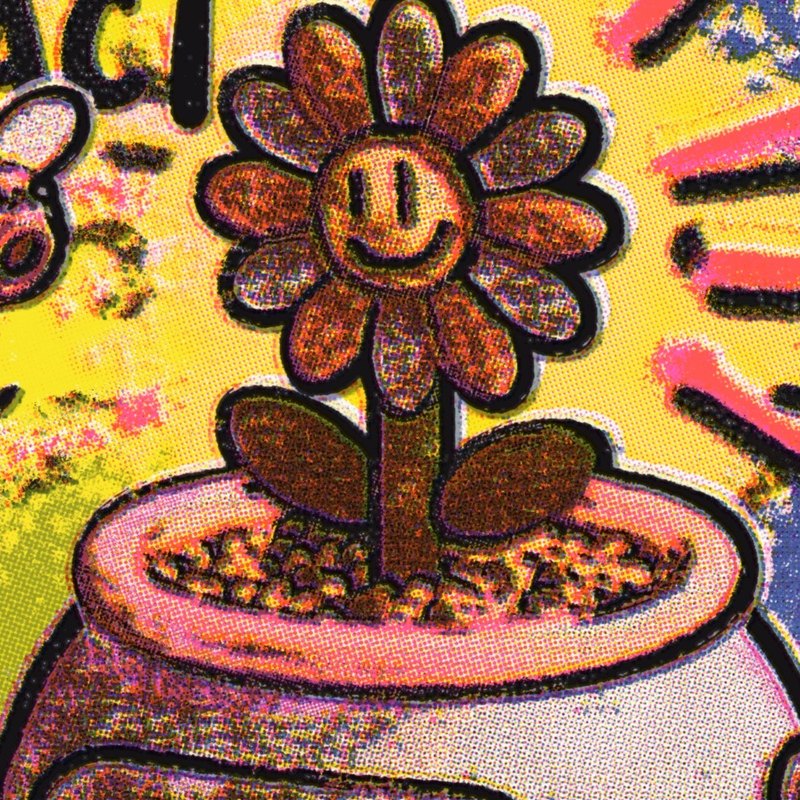
- Posterized the clean render and redrew it with heavy black outlines and speckled clay grain. The daisy got a face.
- Sprayed a collage behind it: yellow, green, cobalt and orange fields.
- Hand-drew FUTURE ARTIFACT, then added the starburst, the lightning bolt, sun rays and dashed bee orbits.
- Set the BONK™ × FUTURE ARTIFACT lockup, two warped checker blocks, a halftone dot grid and the frame.
- Roughened it all with dissolve grit, hard-mix layers and grain.
The reveal film retraces those steps. It opens on the turntable and stops the spin on the pose that matches the printed pot, so the 3D locks straight into the poster.
05 · Separation
Four drums, in press order.
The brief named cobalt, teal and red-orange. The finished art wanted something else, so I tested ink sets against the composite and measured how far each printed result drifted from it. Four inks beat five. A fluoro orange drum was dropped: yellow printed over fluoro pink makes the orange, and taking the yellow away leaves the pink pure.
Oddities stocks one fluorescent, pink, so the yellow is their standard drum. The source art is 5100 × 6600 pixels, which is exactly 600 dpi at 8.5 × 11, so the smaller sheet keeps the type at full resolution with no upscaling.
 1 Fluoro pink
 2 Yellow
 3 Blue
 4 Black
Requested screening: grain touch on the black, 106 on the three colours. Crop marks and registration targets are on every plate.
06 · Paper
Cream or white.
The quote came in on French Paper Whip Cream. Fluorescent ink depends on the light the paper reflects back through it, and with pink now the only fluoro on the sheet, I proofed both stocks side by side. Cream reads warmer and softer. Smart White lets the pink punch harder.
07 · The pop-up
Two days on Locust Street.
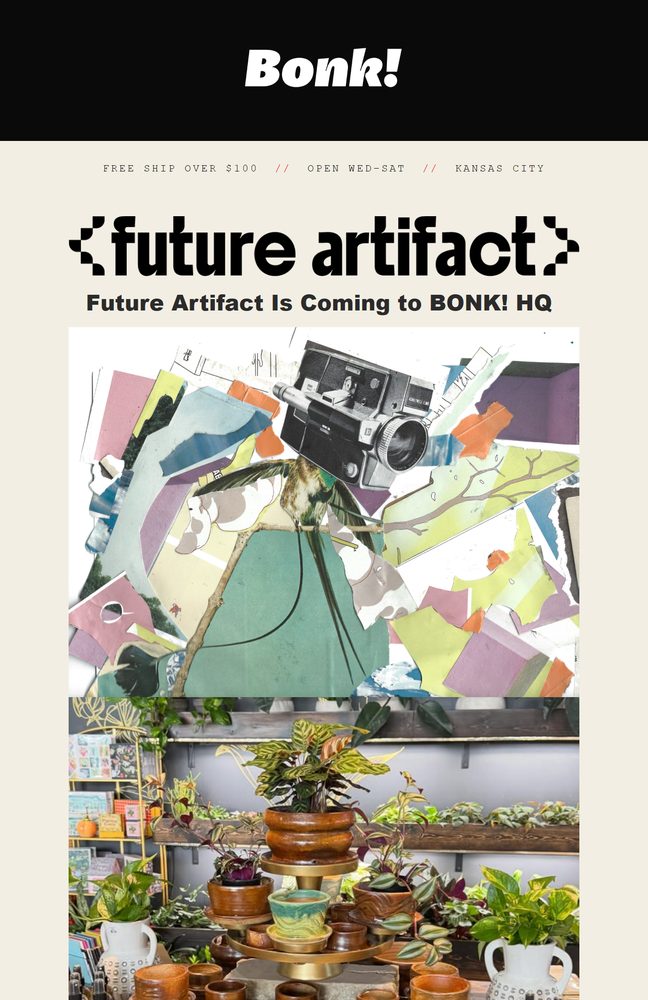
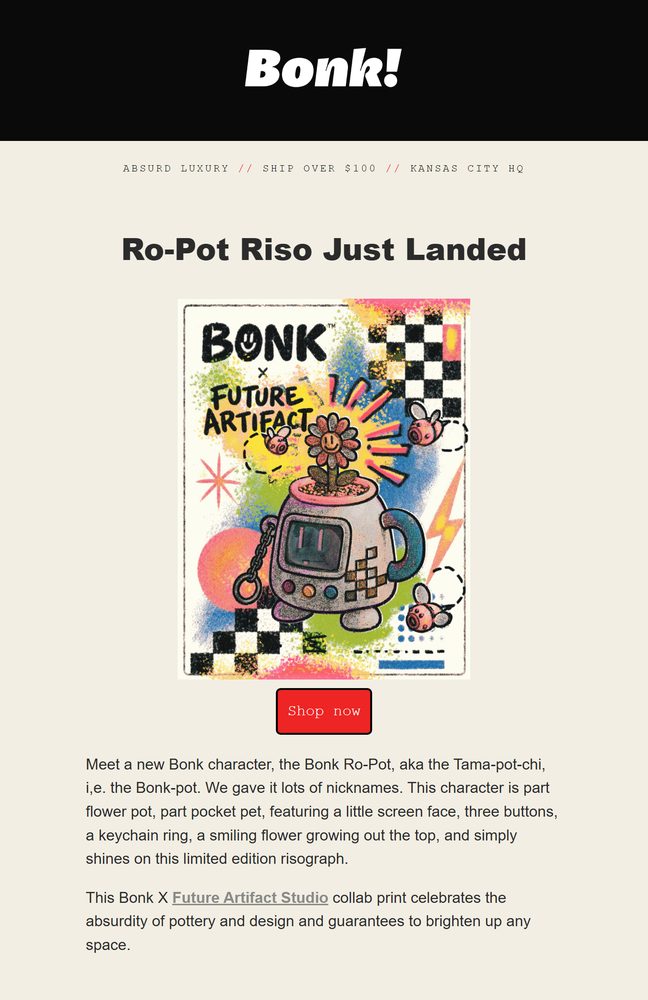
BONK hosted Future Artifact at the shop, 1620 Locust Street, on September 11 and 12, with handmade pottery and collage. Four emails carried it: the announcement, which named the character Tama-Pot-Chi, the workshop, an introduction to Harrison, and on September 22 the print drop. By then it had a few names: Ro-Pot, Tama-Pot-Chi, the Bonk-pot.


Credits
Two studios, one pot.
- Sketch art direction
- Harrison Cook, Future Artifact
- Brief, 3D, print, separations, film
- Mason Barry, BONK
- Print preparation
- Four-ink separation handoff prepared for Oddities
- Emails
- BONK
- Tools
- Cinema 4D and Redshift, Photoshop, After Effects. The pot's body began as an AI-generated base mesh and was rebuilt by hand. The separations and the reveal's element cut-outs were built with scripted tools in an AI-assisted session and checked against the Photoshop master.